The Smart Path to a Beauty Career: Why a Cosmetology Apprenticeship Beats Traditional Beauty School in Denver
Picture this: it’s the summer of 2009. The car windows are down, Boom Boom Pow by the Black Eyed Peas is blaring from the speakers, you’re using the new purple digital camera you bought with your summer job paycheck to snap pics of what’s surely going to be the best summer of your life before all your friends move away to start college. You’re enrolled in cosmetology school that starts in the fall. Life is good.
Fast forward 15 months: you have graduated beauty school, passed your state board exams to be a licensed professional cosmetologist, and are absolutely scared to death to start working behind the chair.
This was my reality at the beginning of my career in the beauty industry. I had an absolute blast in a traditional cosmetology school, complete with a dress code, lunch breaks, trading pedicures with my classmates, and lots of, shall we say, experimental hair. However, I left with very little understanding of how to approach any real-life salon situations. Balayage? What the French is that? Men’s cuts? Scary!! Formulating a color or texturizing thick hair or literally anything beyond the basics we learned to pass state boards? Nope, ask someone else.
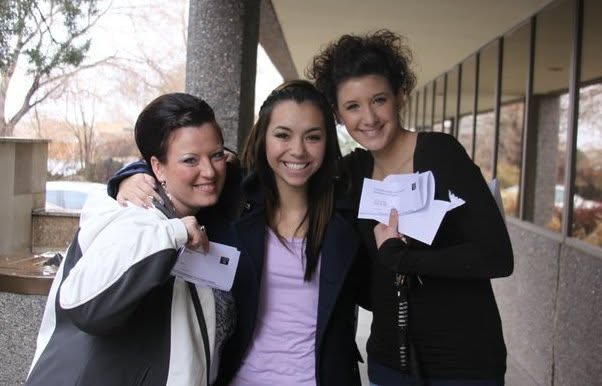
When I started looking for a job as a hairstylist, I found that most salons required a specific amount of time assisting experienced stylists, so that a newbie like myself could learn what was missing between textbook (sometimes outdated) hairstyling and real-life, modern hairstyling. I worked as a receptionist and assistant at my first salon for over a year before I was able to really start my career, making for an education and training period of over two years total. While that worked fine for me at the time, if I had to start all over today I would be choosing a different path to professional.
For decades, there was simply one viable education option: enroll in a traditional cosmetology school, take out thousands of dollars in student loans, and spend over a year practicing on plastic mannequin heads. But as the beauty industry evolves with technology, trends, exposure, and accessibility, the way we train the next generation of elite stylists is changing as well, and driven individuals in Colorado now have a powerful new option when it comes to education.
Top-tier talent is moving away from traditional trade schools and choosing a more modern, business-smart pathway: the Registered Apprenticeship Program (RAP). Whether you are fresh out of high school looking for an exciting career in beauty (like 17-year-old me), or an adult ready for a career pivot (like many of our current stylists were), you’re likely weighing the pros and cons of both. If you’re looking at education options in the Denver metro area, here is what you need to know.
The Real Cost of Cosmetology School in Denver
When you start looking into cosmetology school, that initial tuition price tag looks intimidating enough. The average cost of a full 1,500-hour cosmetology program hovers around $17,000 to $19,500 for tuition alone. But ask anyone who has been through it and they’ll tell you – the raw tuition number is never the whole story. Most premium beauty schools require you to buy their specific tool kit: your shears, your mannequins, your textbooks. What you don’t learn until you’re sitting in a very boring Financial Aid meeting with a nice woman named Dawn is that this kit often runs an additional $2,200 to $2,750 straight out of your own pocket. On top of tuition. But not to worry! You just take out a student loan and it will cover all of that. Hopefully you’re more prepared than I was to understand what that meant long-term, but more on that later. When you add everything together, a student is looking at an average all-in sticker price of roughly $19,000 to $22,000 at most major private beauty academies.

Enter the RAP: The Path I Wish Had Existed
Think of a Registered Apprenticeship Program as the ultimate career hack. Validated by the Department of Labor and Apprenticeship Colorado, it completely flips the old trade school model on its head by letting you earn while you learn. Instead of writing a massive tuition check to practice in a classroom version of a salon, you are hired directly by a registered, high-end operational salon. You complete your mandatory education hours under the direct mentorship of active, top-earning stylists with years of real experience behind the chair – all while earning a real paycheck from day one.
When you look at the numbers side-by-side, it’s easy to see why a RAP is the business-smart choice for high-achieving stylists. Grand Salon & MedSpa’s RAP program is $18,500 all-in, and unlike traditional school, that number actually means all-in. Every tool you’ll need for your education and beyond, all textbooks and coursework, and full access to our online education portal are included. No boring meetings with Dawn. No surprise kit fees. A one-time non-refundable deposit of $2,000 is due on day one, and from there, Grand offers flexible payment plans through the duration of the 12-month program to best fit your financial needs – meaning you are paying as you go, while you earn, without taking out a loan that quietly accrues interest in the background.
The biggest financial game-changer is what economists call opportunity cost, or more simply, the money you lose out on because your time is trapped somewhere else. I spent over a year working on a simulated school floor for free. Between the five-days-a-week schedule (including some evenings and every Saturday), the coursework, and the exhaustion that comes with learning new skills, holding down a regular job on the side was nearly impossible. I was lucky with a short commute, living at home rent-free, and no real financial responsibilities yet. That is not the reality for so many creative professionals looking to break into the beauty industry today. A RAP apprentice, on the other hand, is earning an hourly wage from week one. Over the course of a year, the financial swing between paying to work on a school floor versus getting paid to learn in a luxury salon can mean a $30,000 to $40,000 difference in your bank account. Let that number sink in for a second.
Your at-home skincare products will perform more effectively once they no longer have to penetrate a layer of dead skin cells. When you invest in high-quality serums and moisturizers, you want those active ingredients to actually reach the living tissue. Dermaplaning removes the “gatekeeper” layer of dead cells, ensuring your investment in skincare actually pays off.
The Post-Graduation “Education Gap”
Surely traditional cosmetology schools have also evolved with the industry and are offering a more well-rounded education than they were 15 years ago. Back then, I spent weeks rolling perms on mannequins and never did a single perm in my professional career. I spent hours on textbook haircuts and coloring techniques without any real education on what clients are actually asking for when they sit down in your chair. Want to master complex color formulation? Seamless balayage? Modern extension methods? Not to mention social media and business training… Get your credit card ready, because those skills cost thousands of dollars in advanced courses you’ll be searching for after graduation, just to feel like you can hold your own behind the chair.
When I started working at Grand Salon & MedSpa in 2021, I was in awe of the robust Associate Program – a structured pathway designed specifically for cosmetology school graduates stepping into the professional world. Associates worked alongside the top stylists in the salon; shampooing guests, applying toners, performing beautiful blowouts. They tracked their goals each day with their stylists, brainstormed color formulations and placements, game-planned their busy schedules, and really got their feet wet (metaphorically, of course. They were using their hands).
For years, the Associate Program was open exclusively to licensed cosmetologists who had completed their training elsewhere. That changed last year, when owner Shelly Rewinkle‘s long-held vision finally became reality, and Grand Salon & MedSpa earned state registration in Colorado, allowing it to provide the required pre-licensure education in-house, right where the real work happens.
But Is an Apprenticeship Actually Rigorous?
I get this question a lot, and I understand the skepticism. When I was getting into the biz, “apprenticeship” didn’t exactly sound like the prestigious, structured path. It sounded like you were just… helping out. Sweeping floors. Fetching coffee. Folding towels.
The reality couldn’t be more different. Because a RAP is backed by state and federal standards, it is highly regulated and incredibly thorough. Both paths lead to the exact same finish line: your Colorado Cosmetology License. A RAP just changes where and how you get there. Your training is split between structured book study and hands-on, real-world application, and every hour you log working side-by-side with your mentor counts directly toward your licensing requirements. You will be fully prepared for both the written and practical portions of the State Board exam, plus you’ll truly know what to do when a real human sits down in front of you. And because you’re learning inside a working salon, you master modern trends in real time. If a blonding technique is blowing up on TikTok today, you’re learning it today, from the stylists who are actively getting paid to perfect it on real clients.
The Environment Where You Learn Shapes Everything
I didn’t fully appreciate this until years into my career, but where you learn shapes everything about how you work, what you expect of yourself, and what you believe is possible. The culture you’re trained in doesn’t just become your normal, it becomes your blueprint.
In a traditional school, your instructors are educators: wonderful, knowledgeable people who may not have managed a full client book or worked a busy Saturday on the floor in quite some time. In a RAP, your teachers are active industry leaders. You absorb their daily habits. You watch how they handle a tricky consultation, how they manage their time when they’re double-booked, how they turn a first-time guest into a loyal client. That is an education you simply cannot manufacture in a classroom.
Since its inception, education has been one of the core pillars at Grand. Shelly’s passion for sharing her extensive knowledge both behind the chair and in her business, along with her standard of excellence (and good vibes!), created a lasting culture of collaboration, curiosity, and never-ending growth.
You become part of the real, thriving Denver salon ecosystem from your very first week. By the time you receive your license, the environment already feels like home – because it is.

The Day I Got My License vs. The Day You Could Get Yours
When I graduated beauty school and passed my state boards, I was equally excited and terrified. I had a license and absolutely no idea how to use it in the real world. I spent over a year assisting before I truly felt ready to stand on my own.
A RAP graduate gets to skip that whole chapter. On the day you receive your license, you already have a job at a high-end salon where you are trusted, known, and valued. You already know the software, the team, the products, the culture. You’ve already started building a clientele. You hold a nationally recognized credential from the Department of Labor. You hit the floor running on Day 1. I spent over two years getting to where you could be on your very first day.
Which Path Is Right for You?
Traditional beauty schools still serve a purpose. I have genuinely fond memories of mine, and it was the right fit for me in my hometown right after high school graduation. If you thrive in a structured academic environment and the classroom setting feels right for you, that path is valid.
But if you’re driven, business-minded, and ready to build a real career without taking on debt and losing years of income in the process? A Registered Apprenticeship Program is the modern standard. With Grand’s flexible payment plan, you’re never stuck writing a lump-sum check or signing your financial future over to a loan servicer. You pay as you go, while you grow. It’s the path I would choose if I were starting over today, and it’s the path we’ve built at Grand for the next generation of elite stylists. You’ve worked hard to find your passion. Let us help you build it into something real.
For more information on our education program, please email education@grand-salon.com.
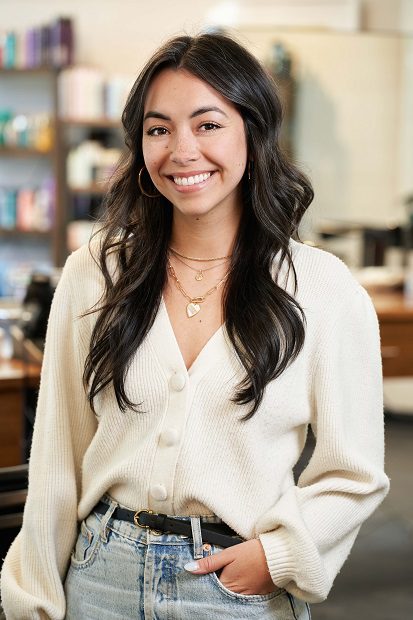
Bekah is a Colorado native with a passion for helping others look and feel their best. She spent 8 years working behind the chair as a hairstylist in Boulder before she moved to Denver. She then worked in the bridal sphere before she came to Grand Salon & Medspa managing the front desk/guest relations and social media.
When Bekah’s not helping guests have the best experience possible at Grand, you can find her exploring a new coffee shop or happy hour, or at home with her two cats Brad and Leo. Follow @bekahgalhair | @grandsalondenver